

 A bar, restaurant, or event venue can serve thousands of guests without incident, and then one night, an overserved patron walks out the door and causes a serious accident. Under Texas law, that single incident can result in a civil lawsuit against the establishment that poured the last drink. For businesses that serve alcohol in Texas, understanding the legal landscape around liquor liability is not a theoretical concern. It is a practical business risk with real financial consequences.
At Fahl & Donaldson, we defend businesses, venues, and insurers on the defense side of dram shop claims throughout Houston and the surrounding area. If your business is facing a liquor liability lawsuit or wants to understand the exposure it carries, dram shop liability defense requires more than a basic insurance policy; it requires legal counsel with direct experience in how these cases actually play out.
Does Texas Require Businesses to Carry Liquor Liability Insurance?
Texas does not require bars, restaurants, or other alcohol-serving establishments to carry liquor liability insurance. The Texas Legislature has considered mandatory coverage bills in recent sessions, but none have been enacted into law. As a result, the decision to purchase coverage is entirely voluntary, and a significant share of establishments in the state operate without it.
This creates real risk for businesses on both sides of a claim. An establishment without coverage that faces a dram shop judgment must satisfy it out of its own assets. Because most businesses are organized as corporations, owners’ personal assets are generally shielded, leaving only the business’s own funds available to pay damages. The absence of a legal mandate does not reduce financial exposure. It simply means that exposure is uninsured for many Texas establishments.
What Does Texas Law Actually Require?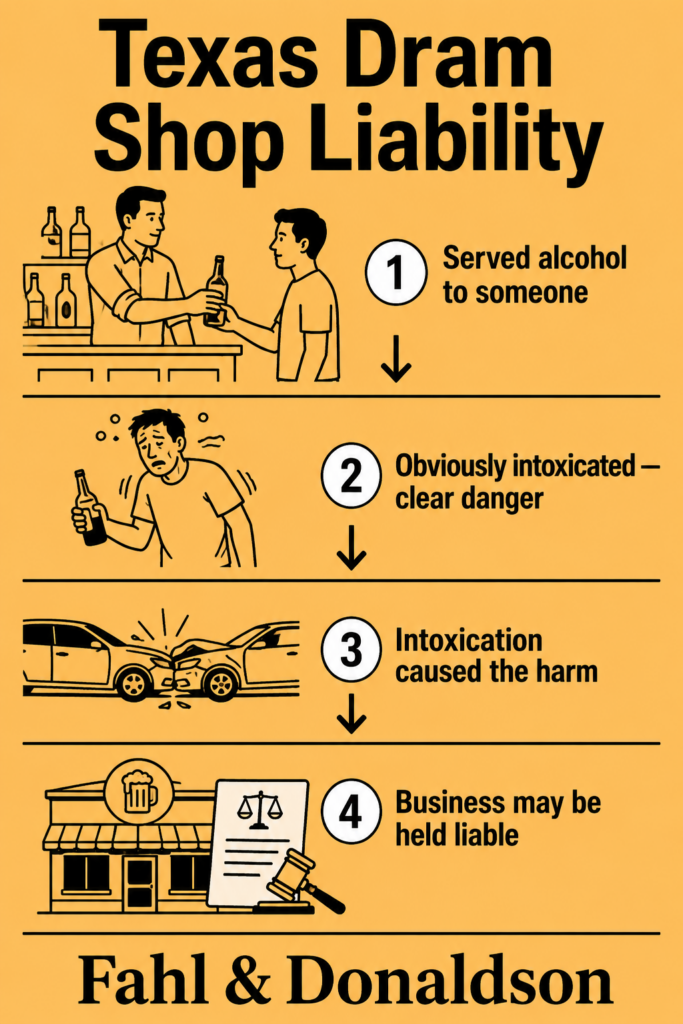
While insurance is not mandated, the legal obligations that create liability are clearly defined. Under the Texas Alcoholic Beverage Code, Chapter 2, a business may be held liable if it served alcohol to someone who was obviously intoxicated to the extent that they presented a clear danger to themselves and others, and that intoxication was a proximate cause of the harm that followed. The law applies to licensed and permitted establishments, including bars, restaurants, event venues, and caterers holding a mixed beverage permit.
Texas law also provides a path to limit liability known as the safe harbor defense. To qualify, a business must show that all employees who served alcohol completed a TABC-approved seller training program, and that the employer did not directly or indirectly encourage violations of the law. This defense is meaningful in litigation, but it requires documented training records and consistent policy enforcement. Businesses that rely on it without proper recordkeeping may find it unavailable when it matters most.
What Coverage Options Are Available?
Liquor liability insurance is distinct from general liability coverage. Standard general liability policies typically exclude alcohol-related claims for businesses that profit from serving alcohol. A separate liquor liability policy, or an endorsement added to an existing policy, is required to address that gap. The following coverage types are most relevant to Texas businesses:
- Liquor legal liability: The core policy type, covering bodily injury or property damage claims arising from negligent alcohol service to an obviously intoxicated person who then causes harm.
- Host liquor liability: Covers businesses that serve alcohol incidentally rather than as a primary activity, such as a company hosting a client event.
- Assault and battery coverage: An important add-on for venues, since incidents at alcohol-serving establishments frequently involve physical altercations that may fall outside a standard policy without this rider.
Texas is currently in a hard insurance market for liquor liability, meaning fewer carriers are writing policies in the state, and those that remain are charging higher premiums and applying stricter underwriting standards.
How Does a Dram Shop Claim Proceed Against a Business?
Facing a dram shop lawsuit involves a legal process that differs from general negligence claims. A plaintiff must prove that the establishment’s service of alcohol was the proximate cause of the harm, not simply that the patron was drinking at the establishment before the incident occurred. These claims frequently arise alongside other serious matters, including premises liability cases and incidents involving commercial trucking where alcohol is a contributing factor. Reviewing dram shop liability statistics gives businesses a clearer picture of how often this exposure materializes.
Defense of these claims typically focuses on whether the patron showed observable signs of obvious intoxication at the time of service, whether the safe harbor defense applies, and whether the harm was caused by intoxication rather than another independent factor.
Contact Fahl & Donaldson About Your Dram Shop Defense
Texas businesses that serve alcohol carry real civil exposure, regardless of whether they hold a liquor liability policy. At Fahl & Donaldson, our attorneys defend establishments, carriers, and insurers against dram shop claims throughout Houston and across Texas, with a track record on the defense side of alcohol liability litigation.
If your business is facing a dram shop lawsuit or wants to understand its legal exposure before a claim arises, reach out to our team through our contact form to discuss your situation.